
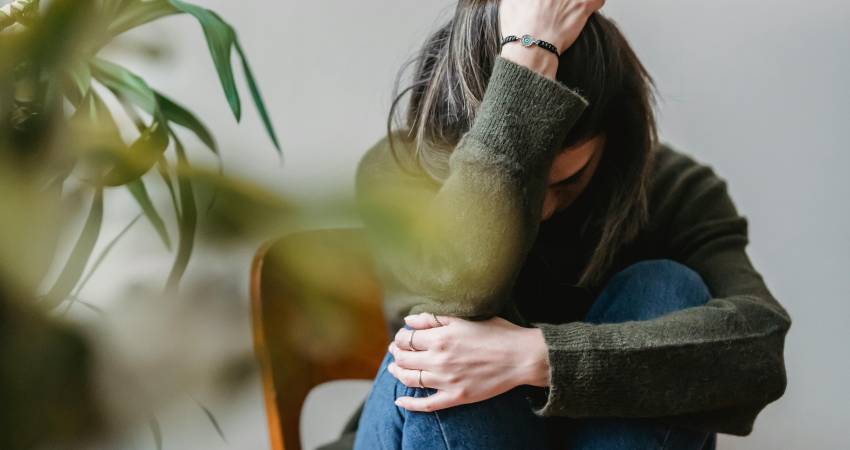
Almost 1 in 4 women experience high persistent emotional distress following abortion, new study finds
Image credit: Liza Summer via Pexels
A new study has discovered that almost 1 in 4 women experience high emotional distress following an abortion that can persist for at least 20 years. These findings have urged the researcher to call for women to be informed of the possibility of experiencing persistent emotional distress when considering an abortion.
The study, which was published in the International Journal of Women’s Healthcare, and led by by D Paul Sullins from the Ruth Institute, was titled “Persistent Emotional Distress after Abortion in the United States” and sought to explore the prevalence and duration of post abortion distress (PAD) over a long period of time, as “few studies have followed women for longer than five years”. Out of a sample of 1,000 US women between the ages of 41-45, 226 had reported experience with abortion, which on average took place 20 years before the study.
Sullins investigated whether PAD declined or persisted over this time period, and discovered that whilst the majority of women (55%) reported to experience little or no distress following their abortion, he discovered that a "significant minority” (44.8%) reported moderate (20.7%) to high (24.1%) PAD following their abortion. This emotional distress was found to still be experienced after 20 years, revealing that PAD persisted over time and did not decline. This means that 1 in 4 women reported to experience persistent high emotional distress following their abortion.
Further results from the study discovered that 31.2% reported “frequent feelings of loss, grief or sadness” and 24.6% reported “frequent thoughts, dreams, or flashbacks”. However, when asked if they felt the decision was right for them, the majority of women (70.1%) reported that they felt confident about their decision, with 8.8% saying they were doubtful, and 21.1% saying they were unsure.
Comparing his results to the wider population, Sullen estimates that out of 31 million US women who have had an abortion, approximately 7.1 million women in the US are suffering with high emotional distress following their abortion. He called for further research into the risk factors associated with this emotional distress following an abortion and to “develop effective therapeutic interventions” for these women. He further concluded that “women considering an abortion should be informed of the possibility that they may experience persistent emotional distress”.
Earlier this year, another study looking at the emotional responses to abortion was published by researcher and advocate for post-abortion healing programs, David C Reardon, who discovered that grief was more commonly reported than relief following an abortion. He discovered that this was more commonly reported amongst those who said their abortion was "inconsistent with their values and preferences” (35.5%), “unwanted” (22%), or “coerced” (12.7%), whereas relief instead was more commonly reported by those who described their abortion as “wanted” (29.9%).
In response to his findings, Reardon made the same call as Sullen to ensure that women are informed of the risk factors associated with experiencing emotional distress, when contemplating abortion.
“Women should be told that if they feel any pressure to abort, or have maternal or moral conflicts with it, negative feelings are more likely than relief. And in many cases, these negative reactions can last for decades. Anything less is deceit,” he said.
Sandra Parda of the Life Institute commented saying: “Another piece of research has shown how women can indeed experience emotional suffering following an abortion. The pro-abortion lobby and the media advocate for a women’s choice but choose to ignore these very women that suffer with the consequences of abortion. This is not a simple “choice” but a woman choosing to end the life of her own child - of course she is going to be at some risk of experiencing some form of distress.”
“Reiterating what Sullen and Reardon have said, when contemplating an abortion, women need to be informed that they could potentially experience high and even persistent distress if they choose to proceed with it. But we should also endeavour to ensure that they are fully informed of all the options available to them that could provide them with any support they need to continue the pregnancy and avoid any unnecessary regret, grief and distress that comes with choosing abortion.”
There are organisations available to provide support for women during pregnancy or following an abortion. Rachel’s Vineyard is a retreat that offers help to women who suffer with post-abortion distress. Gianna Care based in Ireland also provides support to pregnant women as well as nonjudgmental post-abortive support, as does Stanton Healthcare based in Northern Ireland. Every Life Counts is another fantastic organisation that provides support for families whose babies have been diagnosed with life limiting-conditions.
Featured
- Prof: Coppinger’s ‘non-binary’ law would damage data accuracy
- FF’s Martin Daly slammed for ‘attacks’ RE abortion hearing
- Court of Appeal considers case of pastor convicted for preaching the gospel
- Pastor in court TODAY to appeal conviction for preaching John 3:16 in abortion buffer zone
- ANOTHER teacher in UK suing for discrimination after being fired for pro-life views
- Christian woman pleads “not guilty” to NEW charges for silent prayer outside abortion facility
- Woman’s euthanasia request granted in Canada because she could no longer cook for her family
- Person from Victoria dies by suicide after taking assisted suicide drugs meant for their partner
- Pastor to appeal conviction for preaching John 3:16 in abortion buffer zone
- Pro-Life Victory in Belfast: City Hall Illuminated for Life
- “Deplorable”: Anger as Mansion House lit up for abortion
- Controversial abortion light-up at Belfast City Hall on hold
- Family claims 83-year-old was euthanised without giving consent
- Pro-life billboards VANDALISED in Co. Offaly
- TCD abortion “training day’ to include vacuum abortion procedure
- Cavan Choose Life: “eliminating 3-day wait is morally reckless”
- Teen hairdresser wins £30k after boss “tells her to abort baby”
- Thousands expected to gather in London for annual March for Life UK
- Belfast councillors vote to light up City Hall in support of abortion
- GP group admits it did not survey members on three-day wait
- Poll: 55% support keeping the 3-day wait before abortion
- Westminster: MPs vote against Assisted Suicide Bill
- Abortion clinics treated with more respect and protection than Mass in the UK
- Reckless government ignoring the warning signs of a broken system, all for the sake of abortion
- Belfast City Hall “shouldn’t be used as a billboard for abortion”
- Life Institute submission to Health Committee: scrapping three-day wait “a significant betrayal of voter trust”
- Rally for Life Vox Pops
- Have you heard Michael Jackson’s pro-life song, ‘Abortion Papers’?
- You are not entitled to a child.
- EXCLUSIVE — Esme’s open-letter: “The 3-day wait was my saving grace. Abolishing it would be catastrophic”
- Let down by her GP, rushed into an abortion with no three-day wait: the future our government wants?
- Over 900 women sought HSE counselling after abortion since 2023
- Rally for Life 2026
- We Remember them 2026

You can make a difference.
DONATE TODAY