
British actress speaks out on “serious risk” assisted suicide bill has for those with eating disorders
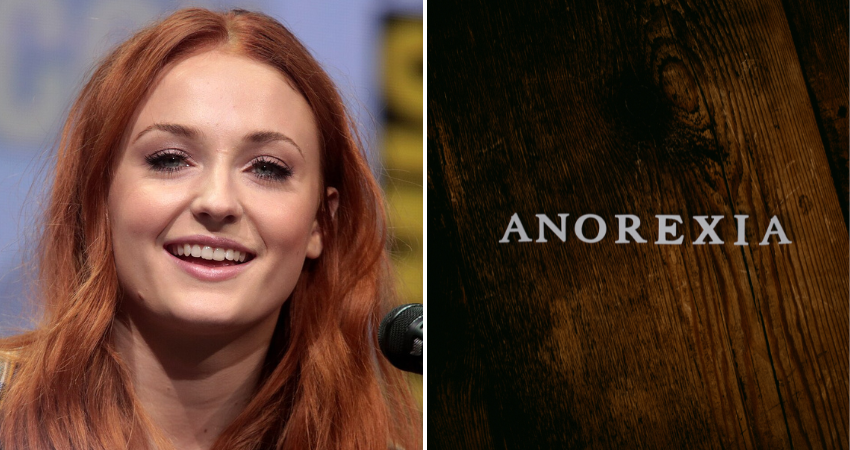
Image credit: Gage Skidmore / Annie Spratt via Unsplash
Sophie Turner, a British actress, has spoken out about her concerns over the “serious risk” the proposed assisted suicide law could have on those with eating disorders.
The assisted suicide bill proposed by Kim Leadbeater, is currently under scrutiny in the House of Lords, and has faced strong opposition amid concerns over the impact it would have on vulnerable people, after passing the third reading in the House of Commons earlier this year. The bill is seeking to make assisted suicide legal for those diagnosed with a terminal illness and given six months to live.
According to The Independent, Sophie Turner, who is best known for her role in Game of Thrones, co-signed a letter orchestrated by Eat Breathe Thrive Foundation for Eating Disorders to the House of Lords, alongside other celebrities including TV presenter Gail Porter and former Hollyoaks actor Stephanie Waring, to share of their “deep concern” the assisted suicide bill could have on those with eating disorders. Back in 2022, Turner revealed in an Elle magazine interview that she herself suffered from an eating disorder.
"We are writing to express deep concern about the Terminally Ill Adults (End of Life) Bill and the serious risk it poses to people with eating disorders." the letter says. "If passed, this Bill could make individuals with eating disorders eligible for assisted death at times when they are unable to access or accept treatment."
"Many young people who could recover with effective care might instead receive lethal medication during a period of despair."
The letter also points out that the law could interpret those with eating disorders as terminally ill if they were to “develop severe physical complications from starvation, purging, or restricting insulin".
Despite the fact that several amendments have been tabled to address concerns within the assisted suicide bill, the letter also points out that "Amendments may lessen the risk for people with eating disorders but cannot remove it entirely."
“The deeper problem lies within the healthcare system itself," the letter continues. "Decades of underinvestment, limited research, and poor co-ordination have left services overstretched and fragmented. Families are waiting months, sometimes years, for treatment while the illness progresses to more severe, complex, and life-threatening stages.”
The group have urged peers to "pause and ensure that legislation intended to bring compassion to those facing terminal illness does not end the lives of those who could still recover".
The letter also draws upon cases of people who died by assisted suicide in other countrys due to having an eating disorder. One case they reference is that of Jessica from Colorado, who suffered with anorexia and depression and died by assisted suicide after a doctor determined her condition incurable.
“According to her family, she repeatedly said she did not want to die but could not continue living as she was”, the letter says.
Additionally, another study from 2024 discovered that over 60 people availed of assisted suicide due to eating disorders in the UK, the Netherlands and Belgium.
In Liz Carr’s documentary on assisted suicide “Better Off Dead?” she interviews Alicia Duncan from Canada whose mother who not only died by assisted suicide, but was fast-tracked on the basis that she had a terminal condition after she starved herself, when she instead had a mental disorder following a car accident.
“If you're depressed, and you starve yourself to the point that you are malnourished they can bump you up to track one and you can die right away,” Duncan told Carr in the documentary.
Back in January, the bill underwent a line-by-line scrutiny by a committee after it passed the second reading in the House of Commons in November 2024. During the committee, several amendments were proposed in order to provide protections for people with specific conditions, such as eating disorders, as well as those diagnosed with Down Syndrome and Autism. At the time Conservative MP, Danny Kruger, who has been a leading advocate against the bill reminded the committee that “anorexia is treated as a terminal illness in parts of the NHS today”. However, these amendments were rejected.
Sandra Parda of the Life Institute commented, saying: “This is fantastic that people like Sophie Turner have stood up to call out the issues with the proposed assisted suicide bill, pointing to the loopholes that could pose a risk to those with eating disorders.”
“The attitude when it comes to assisted suicide it making death a solution to suffering, which can be any form of suffering. Looking at other countries, we see the slippery slope where people with eating disorders end up being subject to such laws that allow them to be killed because of their suffering.”
“We as a society should embrace those suffering and endeavour to help them so that they do not feel the need to seek death.”
Featured
- GP group admits it did not survey members on three-day wait
- Poll: 55% support keeping the 3-day wait before abortion
- Westminster: MPs vote against Assisted Suicide Bill
- Abortion clinics treated with more respect and protection than Mass in the UK
- Reckless government ignoring the warning signs of a broken system, all for the sake of abortion
- Belfast City Hall “shouldn’t be used as a billboard for abortion”
- Life Institute submission to Health Committee: scrapping three-day wait “a significant betrayal of voter trust”
- Rally for Life Vox Pops
- UPDATE: Life-saving surgery performed on baby at center of viral surrogacy case
- Baby born to woman who refused abortion in viral surrogacy case
- "A prince stands in the way": Liechtenstein royal blocks abortion
- Have you heard Michael Jackson’s pro-life song, ‘Abortion Papers’?
- You are not entitled to a child.
- EXCLUSIVE — Esme’s open-letter: “The 3-day wait was my saving grace. Abolishing it would be catastrophic”
- Five days to recover but not three days to consider? The contradiction of paid leave for abortion
- Let down by her GP, rushed into an abortion with no three-day wait: the future our government wants?
- Irish Government backs statutory abortion leave
- The erosion of every right for the unborn child is happening
- BMA seeks legal protection for doctors refusing assisted dying
- Over 900 women sought HSE counselling after abortion since 2023
- Rally for Life 2026
- We Remember them 2026

You can make a difference.
DONATE TODAY