
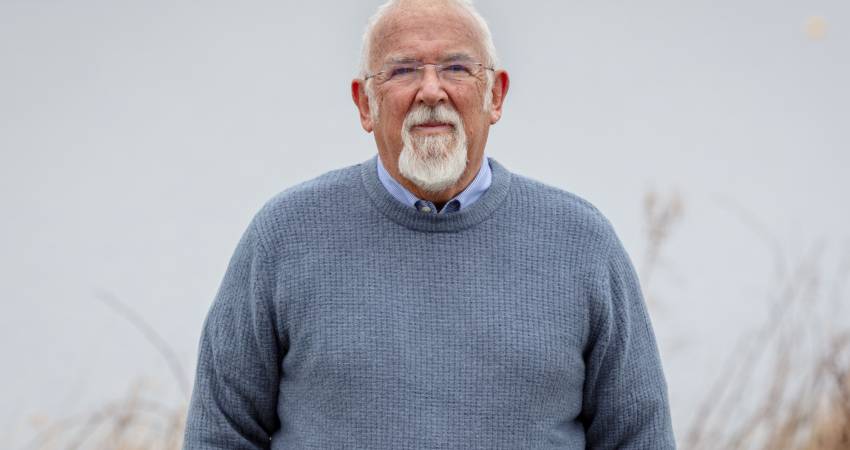
Pastor to appeal conviction for preaching John 3:16 in abortion buffer zone
- 78-year-old retired pastor Clive Johnston’s appeal is due to be heard at the Court of Appeal in Belfast on 15 OCTOBER 2026
- Johnston was convicted and fined after holding a small open-air Sunday service near Causeway Hospital, Coleraine, in July 2024
- His sermon, based on John 3:16, made no reference to abortion, and he was not accused of harassment, intimidation or obstructing access to a clinic
Retired pastor Clive Johnston will appeal his conviction under Northern Ireland’s abortion ‘Safe Access Zones’ legislation, after a court ruled that preaching the Gospel during a small open-air church service near a hospital amounted to a criminal offence.
Johnston, aged 78, was convicted at Coleraine Magistrates’ Court on 7 May 2026 and fined a total of £450. The appeal will challenge the ruling arising from a Sunday service held near Causeway Hospital in Coleraine on 7 July 2024.
The service included preaching from John 3:16, one of the most well-known verses in the Bible, beginning “For God so loved the world...”. There were no banners or placards, and the sermon made no reference to abortion.Johnston was not accused of harassing anyone, verbally attacking anyone or impeding access to a clinic.
Following the conviction, the Police Service of Northern Ireland (PSNI) announced that hospital chaplains and clergy risk being accused of committing a criminal offence if they carry a Bible through a public area of a hospital, or pray with patients on request, in case somebody sees and is “influenced” about an unrelated abortion decision.
At the appeal, lawyers for Pastor Johnston will argue that the District Judge failed to properly recognise his rights to freedom of speech and freedom of religion under the European Convention.
Ahead of his appeal, Clive Johnston said:
“We held a small, open air Sunday service near a hospital. We made no reference whatsoever to the issue of abortion. And yet the buffer zones law is so broad that holding a Sunday service has been found to be a criminal offence.
At 78 years of age I find myself, for the first time, convicted of a crime.
I believe there shouldn’t be any public spaces in Northern Ireland where you can be prosecuted and convicted simply for preaching the gospel. If someone is behaving violently or engaging in harassment, then, absolutely, they should be prosecuted. But I wasn’t doing any of those things.
I am grateful to my legal team and to The Christian Institute for their support. We hope this appeal will clarify that this kind of peaceful Christian worship and preaching is not illegal under this legislation.”
Pastor Johnston is being supported in his legal action by The Christian Institute.
Pastor Johnston is being supported in his legal action by The Christian Institute.
Ciarán Kelly, Director of The Christian Institute, said:
Clive Johnston’s appeal seeks to address fundamental questions about freedom of religion and freedom of speech in Northern Ireland.
Buffer zones were ostensibly introduced to protect people accessing abortion from harassment and obstruction. Yet Clive was convicted after preaching from John 3:16 during a peaceful open-air service, without ever once mentioning abortion.
The issue before the court is whether the legislation can be applied so broadly that peaceful Christian worship in a public place becomes a criminal offence. We will continue to support Clive as he challenges this ruling and seeks to protect the freedom of Christians to express their faith.”
The appeal comes amid wider international attention as to the use of abortion buffer zone legislation and its implications for religious liberty. In April 2026, a US State Department spokesman told The Daily Telegraph that the United States was monitoring buffer zone cases in the UK and other acts of censorship throughout Europe. They referred to the treatment of Clive Johnston as an “egregious violation” of freedom of speech and a “concerning departure” from the shared values that underpin the special relationship.
Related News
- BREAKING: Retired Pastor CONVICTED after first-of-its-kind abortion buffer zone prosecution for open air church service
- NI: Woman cleared as abortion zone conviction collapses
- UK GOV: ‘Buffer zones’ incompatible with ECHR – Goes ahead anyway
- Precious Life welcomes strong stand by Scottish Bishops against 'draconian' Buffer Zones law
Featured
- Prof: Coppinger’s ‘non-binary’ law would damage data accuracy
- FF’s Martin Daly slammed for ‘attacks’ RE abortion hearing
- Court of Appeal considers case of pastor convicted for preaching the gospel
- Pastor in court TODAY to appeal conviction for preaching John 3:16 in abortion buffer zone
- ANOTHER teacher in UK suing for discrimination after being fired for pro-life views
- Christian woman pleads “not guilty” to NEW charges for silent prayer outside abortion facility
- Woman’s euthanasia request granted in Canada because she could no longer cook for her family
- Person from Victoria dies by suicide after taking assisted suicide drugs meant for their partner
- Pastor to appeal conviction for preaching John 3:16 in abortion buffer zone
- Pro-Life Victory in Belfast: City Hall Illuminated for Life
- “Deplorable”: Anger as Mansion House lit up for abortion
- Controversial abortion light-up at Belfast City Hall on hold
- Family claims 83-year-old was euthanised without giving consent
- Pro-life billboards VANDALISED in Co. Offaly
- TCD abortion “training day’ to include vacuum abortion procedure
- Cavan Choose Life: “eliminating 3-day wait is morally reckless”
- Teen hairdresser wins £30k after boss “tells her to abort baby”
- Thousands expected to gather in London for annual March for Life UK
- Belfast councillors vote to light up City Hall in support of abortion
- GP group admits it did not survey members on three-day wait
- Poll: 55% support keeping the 3-day wait before abortion
- Westminster: MPs vote against Assisted Suicide Bill
- Abortion clinics treated with more respect and protection than Mass in the UK
- Reckless government ignoring the warning signs of a broken system, all for the sake of abortion
- Belfast City Hall “shouldn’t be used as a billboard for abortion”
- Life Institute submission to Health Committee: scrapping three-day wait “a significant betrayal of voter trust”
- Rally for Life Vox Pops
- Have you heard Michael Jackson’s pro-life song, ‘Abortion Papers’?
- You are not entitled to a child.
- EXCLUSIVE — Esme’s open-letter: “The 3-day wait was my saving grace. Abolishing it would be catastrophic”
- Let down by her GP, rushed into an abortion with no three-day wait: the future our government wants?
- Over 900 women sought HSE counselling after abortion since 2023
- Rally for Life 2026
- We Remember them 2026

You can make a difference.
DONATE TODAY